

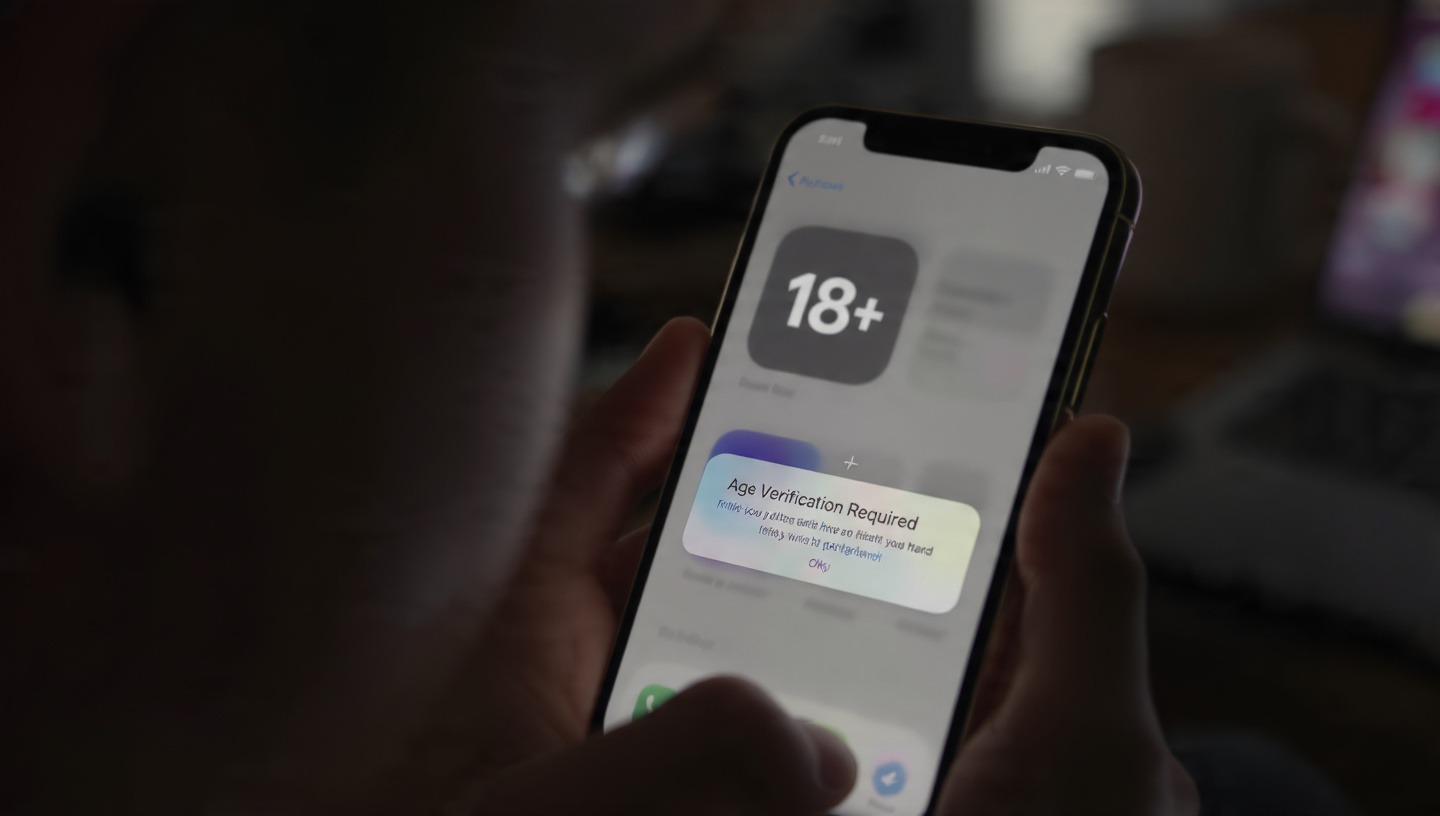
I was scrolling through the App Store the other night, just casually browsing, when I noticed something different. A small prompt popped up asking for age confirmation before accessing certain apps. At first, I thought it was just another routine update. But it wasn’t. Apple has officially stepped into stricter territory.
With its latest move, Apple rolls out age verification for iPhone apps, restricting 18+ content access unless users verify their age. And honestly? This isn’t just a minor policy tweak. It’s a big shift in how adult content is handled on iPhones.
Let’s unpack what’s really going on — and why it matters.
Why Apple Is Introducing Age Verification for iPhone Apps
For years, age ratings on the App Store were mostly advisory. Apps were labeled 4+, 12+, 17+, and so on. But let’s be real — it was easy to tap “OK” and move on.
Now, Apple is tightening things up.
The company is responding to growing pressure from governments worldwide to protect minors online. Countries have been introducing stricter child safety laws, and tech giants are expected to comply. Instead of leaving the responsibility entirely to parents or developers, Apple is adding an extra layer of protection directly at the system level.
And from a business perspective, it makes sense. Apple has always positioned itself as a privacy-focused, family-friendly ecosystem. Allowing unrestricted access to 18+ apps doesn’t align with that image anymore.
How the New Age Verification System Works
Age Confirmation Before Downloading 18+ Apps
If an app is rated 18+, users may now be required to verify their age before downloading or accessing it. Without verification, access is blocked.
This isn’t just a pop-up asking, “Are you over 18?” It’s tied to account-level information. Apple can use data already associated with your Apple ID, including birthdate information provided during setup.
Developer Integration Through Age APIs
Apple has also introduced tools for developers that allow apps to receive age-range signals without collecting sensitive personal data. So instead of sharing your exact birthdate, the system may simply confirm whether you fall within an approved age bracket.
That’s important. It keeps privacy intact while enforcing restrictions.
What This Means for iPhone Users
If you’re over 18 and your Apple ID reflects that, you probably won’t notice much difference. Things should work as usual.
But if age information is missing or unclear, you might suddenly find yourself unable to download certain apps. That can be frustrating, especially if you’ve used those apps before.
And for parents? This is actually helpful. Even with Screen Time controls enabled, kids sometimes find ways around restrictions. An added verification layer makes that harder.
Still, not everyone is thrilled.
The Privacy Debate Around Age Verification
Here’s where it gets interesting.
Whenever a tech company says “age verification,” people immediately worry about data collection. Will Apple start scanning IDs? Will users need to upload documents?
So far, Apple appears to be keeping it simple and account-based. The company emphasizes minimal data sharing. Developers don’t receive your birthdate — only confirmation that you meet age requirements.
That feels like a balanced approach.
But critics argue that any age verification system opens the door to deeper identity checks in the future. Today it’s 18+ apps. Tomorrow? Who knows.
And yeah, that uncertainty makes some users uneasy.
Why This Move Is Bigger Than It Looks
On the surface, this sounds like a small policy update. But it’s actually part of a larger global trend.
Governments are pushing for stricter online protections for minors. Social media platforms, gaming apps, streaming services — they’re all under scrutiny.
By implementing age verification for iPhone apps now, Apple is staying ahead of regulatory pressure instead of reacting to it later.
And if we’re being honest, Apple tends to set industry standards. When they remove a headphone jack, others follow. When they change privacy tracking rules, the entire advertising ecosystem shifts.
So if Apple normalizes age-gated app access, don’t be surprised if other platforms adopt similar systems.
Impact on App Developers
For developers who run adult-themed apps — dating platforms, certain gaming apps, or content-based services — this change could affect download rates.
Some users might drop off during verification. Even a small friction point can reduce installs.
But there’s a flip side.
Apps that comply with stricter age controls may gain more credibility. Parents are more likely to trust platforms that clearly separate adult content from general access.
And in the long run, a safer ecosystem usually benefits everyone involved.
Is This the End of Easy Access to 18+ Content on iPhone?
Not exactly.
Adults can still access adult-rated apps. Apple isn’t banning them. It’s just adding a checkpoint.
Think of it like showing ID at a store. If you’re eligible, you proceed. If not, access stops there.
The difference is that this check happens digitally, within the Apple ecosystem.
Some users will barely notice it. Others will see it as unnecessary control. That split reaction is pretty normal whenever tech companies introduce tighter rules.
My Honest Take
I get both sides.
As someone who values privacy, I’m cautious about verification systems. No one wants to feel monitored.
But at the same time, I’ve seen how easily kids can access things they shouldn’t. A simple age prompt isn’t enough anymore. Kids are smart. They tap “Yes” without thinking twice.
If Apple can enforce age restrictions without harvesting personal data, that feels like a reasonable compromise.
The real test will be transparency. Users need clear communication about what data is used and how it’s protected.
If Apple handles that well, most people will adapt quickly.
Frequently Asked Questions
Does Apple require ID verification for 18+ apps?
As of now, Apple primarily relies on age information linked to your Apple ID. There’s no widespread requirement to upload government IDs for general app access.
Will existing 18+ apps stop working?
If your age information is verified and you meet the requirement, your apps should continue functioning normally. Problems may arise only if your account lacks proper age details.
Is this change happening worldwide?
The rollout may vary by region depending on local laws and regulations. Apple often introduces compliance features in stages.
Can parents override age restrictions?
Parents can manage child accounts through Family Sharing and Screen Time settings, but 18+ restrictions are tied to age verification policies.
Does this affect all apps?
No. Only apps rated 18+ or classified as adult content are impacted by stricter verification measures.
Final Thoughts
Apple’s decision to roll out age verification for iPhone apps and block 18+ content without verification isn’t random. It’s part of a bigger shift toward accountability in digital spaces.
Will everyone love it? Probably not.
But the internet isn’t the wild west anymore. Platforms are being pushed to take responsibility — and Apple just made its move.
