

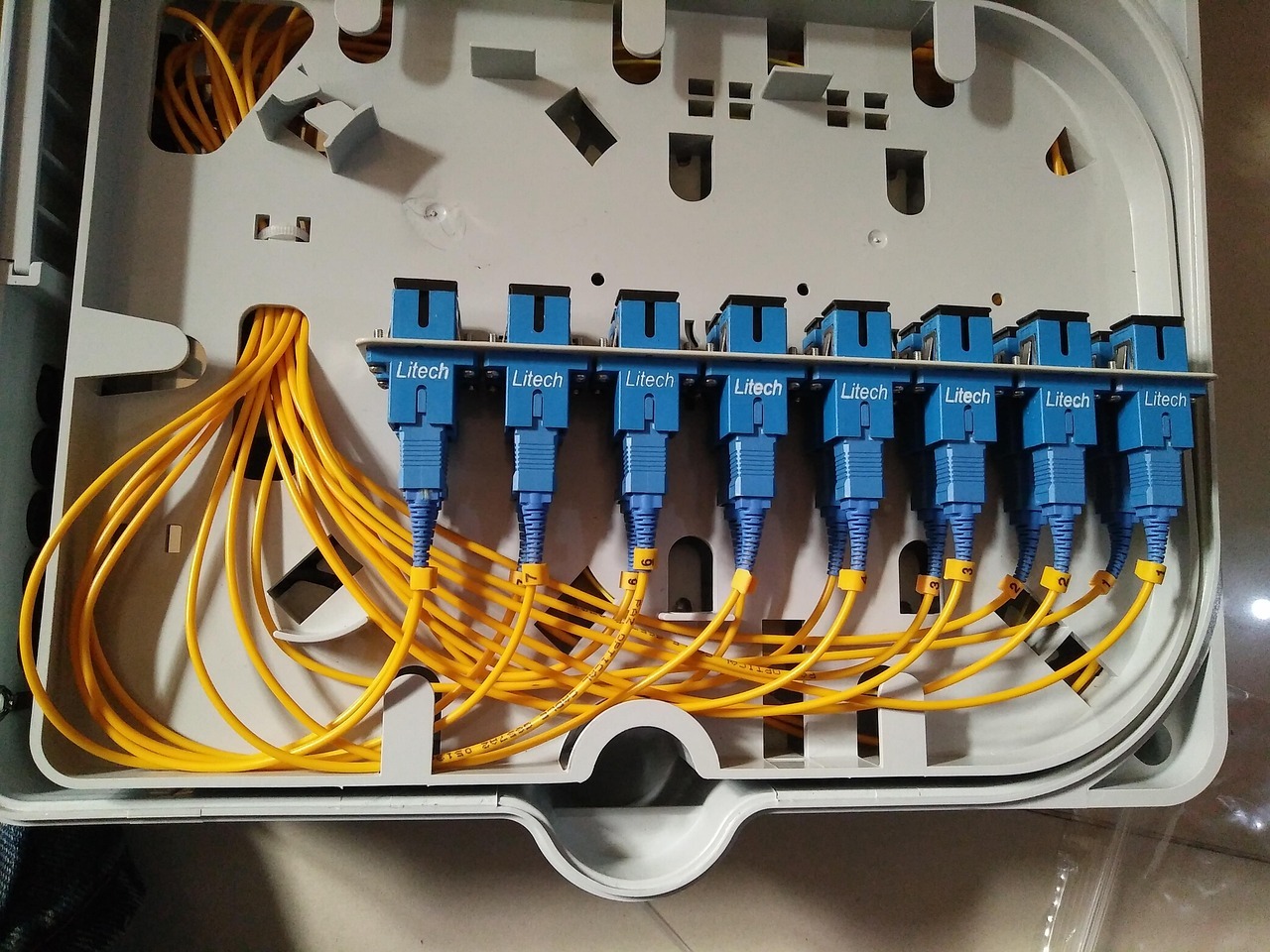
A Quiet Revolution Happening Under Our Feet
Deep beneath the streets of Germany, inside ordinary-looking fiber cables, something extraordinary just happened. Researchers successfully transmitted quantum information across a 30-kilometer fiber link — a milestone many experts thought would take years longer to perfect.
It doesn’t look dramatic. No rockets. No giant machines. Just light particles traveling through fiber.
But those particles? They change everything.
This advancement in quantum fiber internet means data can now be transmitted using quantum mechanics principles — specifically quantum entanglement and quantum key distribution (QKD). That’s the kind of encryption that, in theory, cannot be hacked without being detected.
And in a world where cyberattacks feel like daily headlines… that matters.
What Makes Quantum Fiber Internet So Different?
Let’s slow this down for a second.
The internet we use today relies on classical signals — electrical or light pulses that represent 1s and 0s. It works, sure. But it’s vulnerable. If someone intercepts data cleverly enough, you might never know.
Quantum communication doesn’t play by those rules.
Instead of just sending signals, it uses quantum states of photons. And here’s the wild part: if anyone tries to observe or intercept those photons, their state changes immediately. That means eavesdropping becomes instantly detectable.
It’s like sending a sealed letter that self-destructs if someone else opens it.
Germany’s 30-kilometer test proves that this isn’t just a lab experiment anymore. It can function across real-world fiber infrastructure.
That’s huge.
Why 30 Kilometers Is a Big Deal
Thirty kilometers might not sound groundbreaking at first. I mean, regular fiber networks stretch thousands of kilometers, right?
But quantum signals are fragile. Extremely fragile.
They degrade quickly over distance. Even small environmental interference — temperature shifts, vibrations, signal noise — can ruin quantum states.
So achieving stable, secure quantum transmission over 30 kilometers of existing fiber means researchers are solving one of the biggest obstacles in building scalable quantum fiber internet systems.
It’s a stepping stone toward something bigger:
- Secure city-wide quantum networks
- Interconnected quantum data centers
- Eventually, a global quantum internet
And honestly, that last one still sounds surreal.
Why Germany Is Leading This Race
Germany has been heavily investing in quantum technologies for years. Through national research programs and European Union collaborations, the country has positioned itself as a leader in quantum innovation.
Institutions like Fraunhofer Society and partnerships connected to the European quantum communication infrastructure initiative have been pushing practical implementation, not just theory.
This 30-kilometer breakthrough wasn’t random. It’s the result of consistent funding, strong academic networks, and a clear digital security strategy.
And let’s be honest — with growing geopolitical tensions and increasing cyber warfare threats, countries aren’t investing in quantum communication just for curiosity.
They’re preparing.
How This Impacts Cybersecurity
If you run a bank, a government office, or even a tech startup handling sensitive data, encryption isn’t optional. It’s survival.
The problem? Classical encryption methods — even strong ones — could eventually be broken by powerful quantum computers in the future.
That’s the ironic twist.
Quantum computers may threaten today’s encryption… but quantum fiber internet also provides the solution.
By implementing quantum key distribution across fiber networks, organizations can create encryption keys that are fundamentally secure. Any interception attempt becomes visible instantly.
It shifts cybersecurity from “hard to break” to “physically impossible to break without detection.”
That’s not marketing hype. That’s physics.
What This Means for the Rest of the World
Right now, this technology is limited. It’s expensive. It requires specialized equipment.
But so did traditional fiber once.
Remember when fiber internet was rare and costly? Now it’s normal in many cities.
Quantum fiber internet will likely follow a similar path. Slow adoption at first. Government networks. Financial institutions. Military infrastructure.
Then gradually — commercial expansion.
We probably won’t see quantum routers in homes anytime soon. But secure quantum backbones supporting global infrastructure? That’s coming.
And Germany just moved the timeline forward.
The Bigger Vision: A Quantum Internet
Imagine a future where:
- Data breaches are nearly impossible.
- Financial transactions can’t be secretly intercepted.
- Governments communicate without fear of hidden surveillance.
- Quantum computers connect across networks to solve global scientific challenges.
That’s the long-term vision.
A fully operational quantum internet wouldn’t just be faster — it would be fundamentally different. It would enable distributed quantum computing, ultra-precise synchronization, and next-level scientific collaboration.
We’re not there yet.
But 30 kilometers is proof that the road is being built.
The Real Question: How Fast Will It Scale?
Here’s what I keep wondering.
Technology moves slowly… until it doesn’t.
AI exploded in just a few years. Fiber networks spread faster than expected once infrastructure aligned. Cloud computing reshaped industries almost overnight.
Quantum fiber internet feels like it’s at that quiet pre-boom stage.
The foundations are being laid. Governments are investing. Researchers are solving distance limitations step by step.
And when the tipping point comes, most people won’t even notice at first.
Until suddenly, security standards change everywhere.
Final Thoughts
This 30-kilometer breakthrough in Germany isn’t just another tech headline. It’s a signal.
A signal that quantum communication is leaving the lab and entering the real world.
Will it replace the classical internet tomorrow? No.
But it’s starting to shape what secure communication will look like in the next decade.
And honestly… that’s exciting.
Because for once, we’re not just upgrading speed.
We’re redefining trust.
FAQs
What is quantum fiber internet?
Quantum fiber internet uses quantum mechanics principles, such as entangled photons and quantum key distribution, to transmit data securely over fiber optic cables. It allows detection of any interception attempts, making communication fundamentally more secure than classical encryption.
Why is the 30-kilometer test important?
Quantum signals weaken quickly over distance. Successfully maintaining stable quantum communication across 30 kilometers of real-world fiber infrastructure shows that scalable deployment is becoming realistic.
Is quantum fiber internet available to the public?
Not yet. It’s currently being tested for government, research, and high-security applications. Widespread public use may take several years.
Can quantum fiber internet prevent hacking?
It doesn’t prevent hacking entirely, but it makes interception detectable instantly. That changes cybersecurity from reactive to proactive.
Will quantum internet replace today’s internet?
It’s unlikely to replace it completely. Instead, it will likely work alongside existing infrastructure, providing ultra-secure communication layers where needed.
