

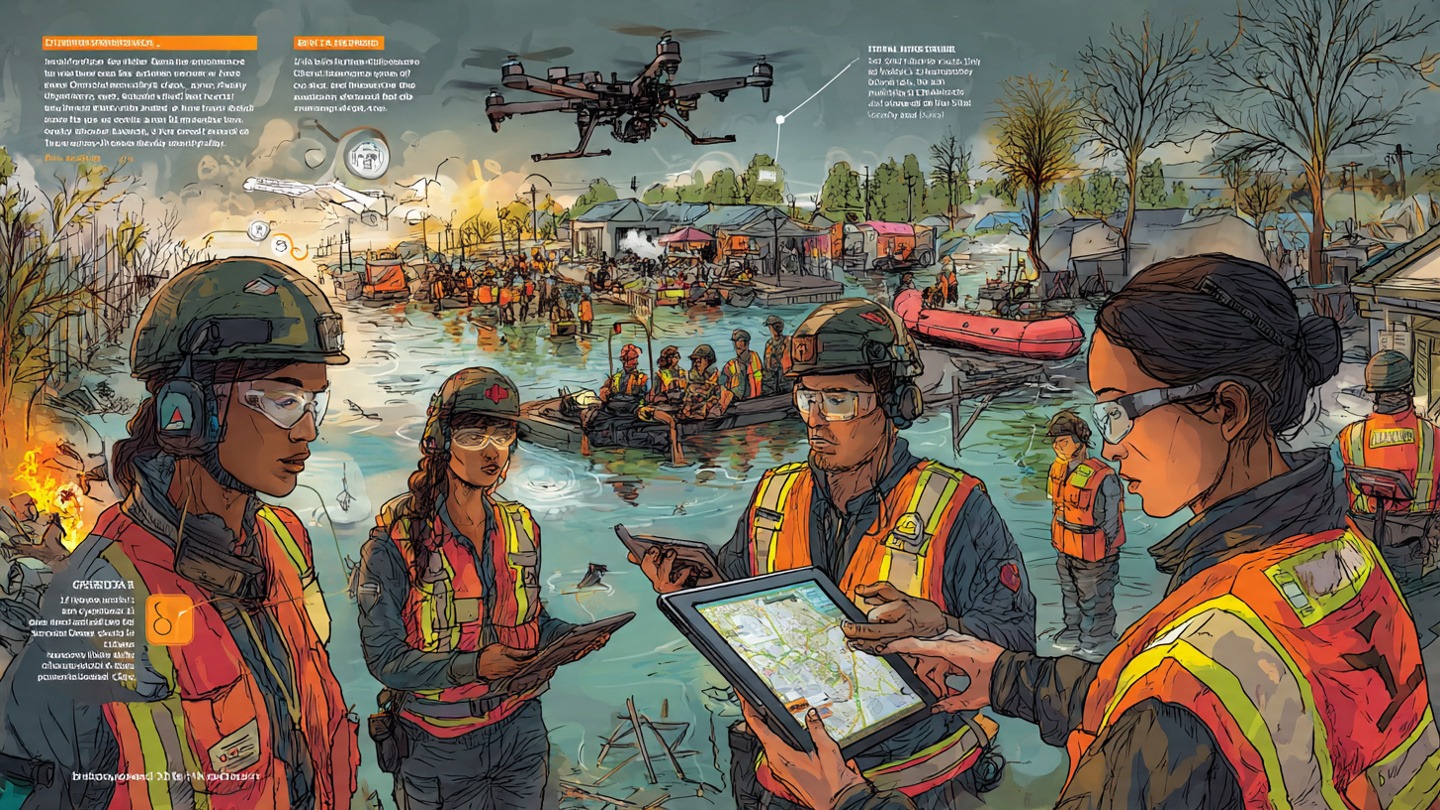
I still remember the first time I watched a disaster response team work up close. It was after a flood swept through a nearby town. I saw people sprinting across muddy fields, trying to keep up with changing water levels, while others struggled to communicate with rescuers because radios kept cutting out. That moment made something click in me—I realized that these crews work under pressure most of us can’t even imagine. Yet, we don’t talk nearly enough about how to truly support them so they can save more lives with fewer setbacks.
Let’s explore what it really takes to empower disaster management crews—not in some textbook way, but in ways that make sense for the folks who are out there when things go wrong.
Understanding the Role of Disaster Management Crews
What Disaster Management Crews Do
Disaster management crews are the people you see when chaos hits: emergency medical technicians, search and rescue teams, logistics specialists, communication officers, and even volunteers pouring in from local communities. They wake up before sunrise, train, respond to alerts, coordinate with strangers, and sometimes go without sleep for days. That’s not an exaggeration—that’s real life for these individuals.
Importance in Emergency Response and Public Safety
These teams are the backbone of community safety. Without them, roads stay blocked, injured people can’t get treatment, and infrastructure collapses with no one to guide the recovery. Their work doesn’t just affect immediate victims; it impacts long-term rebuilding, trust in public services, and even economic stability.
Key Responsibilities and Challenges
Day‑to‑day responsibilities are vast: risk assessment, evacuations, resource allocation, and more. The challenges? Communication breakdowns, outdated equipment, physical exhaustion, and mental burnout. And the worst part? Many of these challenges are preventable with the right support.
The Importance of Training and Skill Development
Advanced Training Programs for Disaster Scenarios
Training isn’t just about reading manuals or attending seminars once a year. It’s hands‑on, scenario‑based learning where crews run through realistic simulations. Think of firefighters training in smoke‑filled halls or medics practicing mass casualty responses. These intense drills sharpen instincts and increase confidence when real events unfold.
Simulation Exercises and Continuous Learning
Disasters don’t follow a schedule, and they don’t stick to one pattern. That’s why simulation exercises that mimic earthquakes, floods, chemical leaks, or even cyber‑attacks matter. These exercises help crews anticipate unexpected twists, rethink strategies on the fly, and never become complacent.
Leadership and Decision‑Making Skills
Skillful leadership can turn chaos into coordinated action. Programs that teach decision‑making under stress, negotiation skills, and conflict resolution help field leaders stay calm and make sound calls in the heat of the moment. That’s something you can’t fake—it’s practiced.
Providing Modern Technology and Equipment
Core Technology Stack for Disaster Response
Crews need gear that actually works when it matters: rugged handheld devices, satellite phones that don’t drop signals, high‑capacity power banks, reliable transport, and sensors that detect hazards in real time. These aren’t luxury items—they’re essentials.
Digital Tools: Communication, Data Collection, Mapping
I’ve seen teams trying to coordinate on WhatsApp when networks fail—that’s not ideal. Modern tools exist that help gather data in real time, map disaster zones dynamically, and help teams locate each other instantly. When a search and rescue unit knows exactly where colleagues are and what they’ve already checked, lives get saved faster.
Use of AI, Drones, and Predictive Analytics
Emerging technologies like drones and predictive systems can transform responses. Drones survey areas too dangerous for humans. Predictive systems analyze weather patterns and past data to forecast where disasters might strike next. These tools allow us to plan ahead instead of only reacting.
Strengthening Coordination and Communication
Inter‑Agency Collaboration
You might have the best personnel, but if fire departments, medical teams, and local authorities don’t talk seamlessly, efforts get duplicated and progress stalls. Regular joint exercises and shared communication platforms help break down those barriers.
Centralized SOPs and Real‑Time Communication Systems
There’s nothing worse than confusion when every second counts. A centralized standard operating procedure (SOP) that everyone knows and trusts keeps processes running even under stress. And real‑time communication tools help teams share updates instantly.
Multi‑Platform, Multilingual Accessibility
Not every responder speaks the same language, and not every tool works everywhere. Systems that support multiple languages and platforms ensure no one is left behind simply because of a language barrier or tech incompatibility.
Ensuring Physical and Mental Well‑Being
Mental Health Integration and Resilience Training
This work is emotionally heavy. Seeing devastation day after day gets into your bones eventually. Providing consistent mental health support, counselling services, and resilience training should be standard, not optional.
Psychological First Aid for Field Teams
Crews often help afflicted communities—but who helps the helpers? Psychological first aid teaches them how to recognize signs of stress and trauma in themselves and peers. That awareness saves careers and lives.
Stress Management and Recovery Protocols
When you work 16‑hour shifts in dangerous conditions, your body and mind demand recovery. Proper rest schedules, recovery spaces, and stress relief programs aren’t indulgences; they’re necessary for sustainable performance.
Encouraging Community Participation and Collaboration
Engaging Volunteers and Local Communities
Every community has people who want to help but don’t know how. Structured volunteer programs allow locals to assist safely and productively. Their local knowledge sometimes becomes an invaluable asset.
Crowdsourced Incident Reporting
Apps and systems that let community members report issues in real time help responders know exactly where help is needed. It’s faster than waiting for official channels and often more accurate.
Public Awareness Campaigns
People often wait until disaster strikes to care about preparedness. Teaching basic safety steps—what to pack, how to evacuate, how to help neighbors—goes a long way in reducing panic and chaos.
Investing in Research, Innovation, and Best Practices
Continuous Innovation in Disaster Management
We can always do better. New research, better tools, improved training—these aren’t trends, they’re necessities. Organizations that invest in innovation don’t just react; they improve their capability over time.
Leveraging AI and Emerging Technologies
When advanced analytics and machine learning help interpret massive sets of data, teams can predict risk zones or resource needs more accurately. These technologies don’t replace human effort, but they can supercharge it.
Case Studies of Successful Implementations
Look at stories from Japan’s earthquake responses, or community‑based systems in the Philippines. Where technology and training were prioritized, outcomes improved measurably. These real stories teach more than any manual ever could.
Building Strong Leadership and Organizational Support
Developing Effective Leadership in Disaster Response
Leadership in a crisis isn’t about giving orders loudly—it’s about calm guidance, informed decisions, and empathy. Developing these traits in crew leaders transforms team trust and performance.
Organizational Frameworks and Governance
Clear roles, transparent decision‑making, and streamlined hierarchies make it easier for crews to act without hesitation. Chaos thrives in grey areas; structure fights it.
Recognition, Career Development, and Training Incentives
People put in their best when they know their efforts matter. Awards, career pathways, and ongoing training encourage commitment and reduce turnover in these demanding roles.
Promoting Public Awareness and Education
Educating Citizens for Preparedness
Outreach programs that teach people what to do before disaster strikes can save countless lives. Knowing evacuation routes or how to use a first‑aid kit changes outcomes dramatically.
Role of Media and Digital Campaigns
Campaigns that reach people where they live—their phones, computers, TV—make preparedness part of everyday life. Stories, guides, and simple messages get absorbed over time.
Encouraging Safe Practices and Community Resilience
Communities that practice drills, store emergency kits, and check on neighbors bounce back faster. This isn’t just about knowledge; it’s about mindset.
Future Trends in Empowering Disaster Management Crews
AI‑Driven Decision Making
With data at our fingertips, future responses will be quicker and smarter. Decisions backed by real‑time information reduce guesswork and increase confidence on the ground.
Smart Tools and Digital Platforms
Wearables that track vitals, apps that sync teams instantly, and cloud systems that store and share information globally—these tools will grow more powerful and accessible.
Global Collaboration and Knowledge Sharing
Disasters don’t respect borders, and teams around the world can learn from one another. Shared platforms and international training partnerships help everyone raise their game.
Frequently Asked Questions (FAQs)
How can technology empower disaster management crews?
Technology boosts communication, mapping, data collection, safety gear, and forecasting. It helps teams act faster with better information.
Why is training essential for emergency response teams?
Training builds muscle memory, confidence, and decision‑making under stress. It means responders don’t freeze when chaos hits.
What tools improve disaster response effectiveness?
Drones, rugged communication devices, predictive systems, and real‑time mapping tools all make responses more accurate and safer.
How do leadership and coordination impact crew performance?
Good leaders reduce confusion and boost morale. Coordination between agencies cuts down on duplicated effort and wasted time.
Conclusion
Empowering disaster management crews isn’t about a single magic fix. It’s about combining solid training, practical tools, strong leadership, community involvement, and continuous learning. These are the building blocks that turn stress into strategy and confusion into coordinated action.
When we invest time, money, and effort into these areas, we’re not just helping teams do their job better—we’re supporting the people behind the uniforms, the tired voices on radios, and the hands that reach out to help strangers. That, ultimately, is what empowerment really looks like.
