

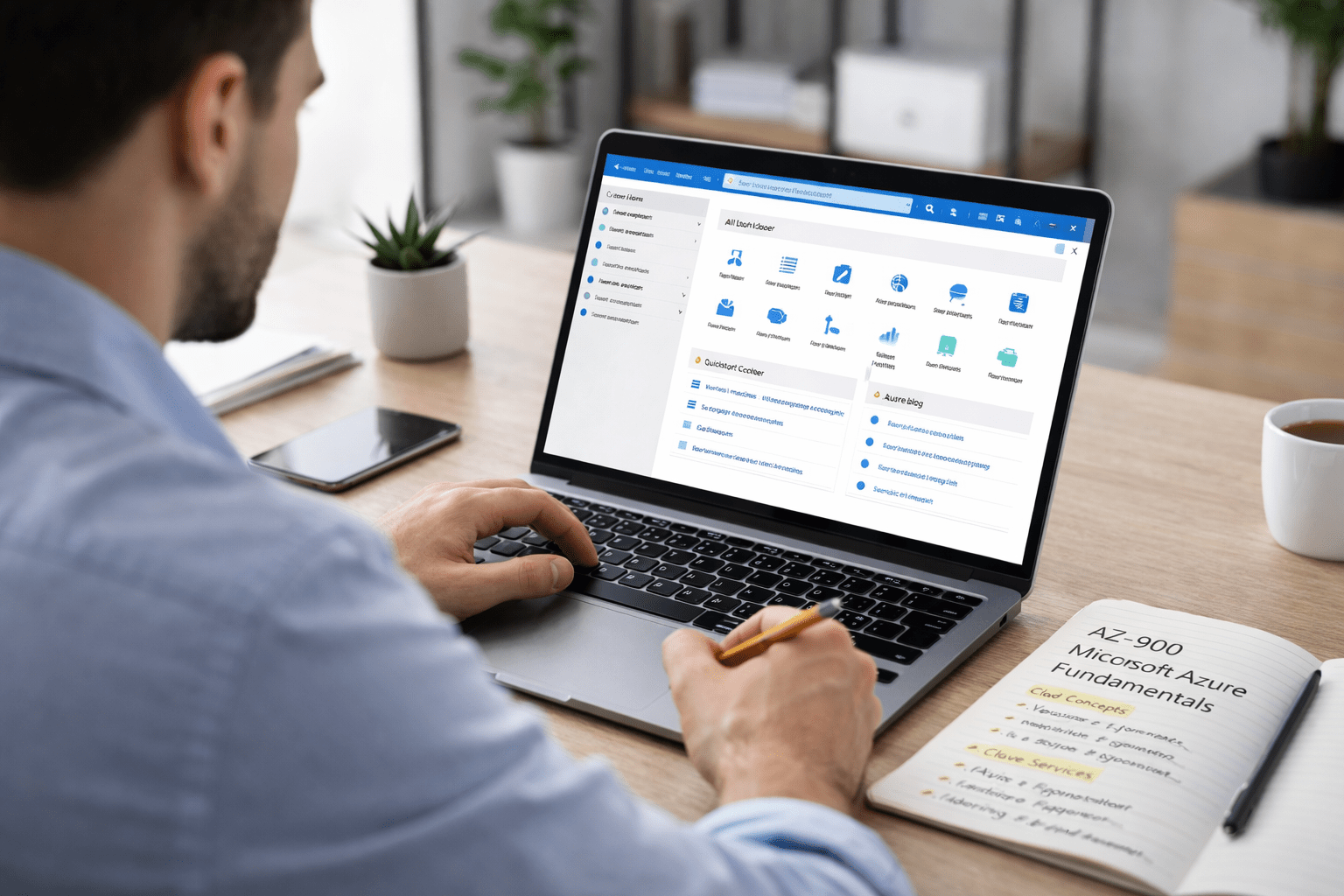
With cloud adoption accelerating across every industry, Microsoft Azure Fundamentals has become the single most recognized entry point into cloud certifications. AZ-900 requires no prerequisites, costs under $180, and is accepted by employers worldwide as proof that you understand how cloud computing works. Here is what you need to know.
If you work in any part of the technology sector or increasingly, any sector at all you have probably noticed that cloud literacy has moved from a nice-to-have to a baseline expectation. Job descriptions that once called for specific infrastructure skills now routinely include Microsoft Azure, AWS, or Google Cloud as part of the requirements list. For people entering the field or transitioning into cloud-adjacent roles, the question is not whether to get certified but where to start.
The answer, for most people with an eye on the Microsoft ecosystem, is AZ-900. The Microsoft Certified: Azure Fundamentals certification is the starting point of the Azure certification pathway — and it is one of the most popular technology certifications in the world for good reason. No coding background required. No hands-on technical experience necessary. Just a structured understanding of how cloud computing works and how Azure is organized.
What AZ-900 Actually Tests
According to the official Microsoft Azure Fundamentals certification page, the exam covers three main content areas. Cloud concepts make up roughly 25 to 30 percent of the exam and cover the fundamental principles of cloud computing, the benefits of cloud adoption, the differences between IaaS, PaaS, and SaaS, and the characteristics of public, private, and hybrid cloud models. The largest section of the exam, Azure Architecture and Services, accounts for 35 to 40 percent of the total marks. It covers the fundamental components that make up the Azure platform, how regions and availability zones work, how resources are organized into groups, and the core services across compute (virtual machines), storage, databases, and networking. Azure Management and Governance rounds out the exam at roughly 30 to 35 percent of the content, covering how Azure handles pricing, cost management, service level agreements, compliance frameworks, and the core security and governance tools built into the platform.
The exam runs for 45 minutes and mixes standard multiple-choice questions with scenario-based items that test applied understanding rather than simple recall. To pass, candidates need a score of at least 700 out of a possible 1,000.
The exam is available in 12 languages and can be taken either in person at a Pearson VUE testing centre or online from home with remote proctoring. The application fee is approximately $165 USD, though pricing varies by country.
Who Should Actually Sit the AZ-900
One of the most common misconceptions about AZ-900 is that it is only useful for developers or IT professionals. In practice, the exam is explicitly designed for a broad audience that includes people with non-technical backgrounds. Business analysts, project managers, finance professionals, marketers, and sales staff working at organizations that use Azure all benefit from understanding the platform’s fundamentals. Microsoft designed the certification to serve as a shared vocabulary across technical and non-technical teams.
“The AZ-900 is the entry point, not the ceiling. But as an entry point, it is remarkably powerful it maps the entire Azure landscape in a way that makes every subsequent technical certification easier to understand and faster to earn.”
For people who are purely new to cloud concepts, structured preparation matters more than the exam’s accessible reputation might suggest. The breadth of content spanning cloud theory, Azure infrastructure, governance, and pricing means that surface-level familiarity is not the same as exam readiness. Working through timed AZ-900 practice test questions and answers under simulated exam conditions helps candidates identify which content areas need more attention before sitting the real assessment.
The AZ-900 in Context: What Comes After
AZ-900 is the foundation, not the destination. Candidates who pass it and want to specialize have a clear path forward through the Azure role-based certifications: AZ-104 for Azure Administrators, AZ-204 for Developers, AZ-305 for Solutions Architects, and AI-900 for those moving into artificial intelligence and machine learning. Each builds directly on the conceptual framework that AZ-900 establishes.
For employers, AZ-900 on a CV signals that a candidate understands what cloud infrastructure is, how Azure is organized, and how cloud economics work. In an industry where jargon is plentiful and genuine foundational knowledge is often scarcer than it sounds, that signal carries real weight — particularly for candidates making the transition into cloud-focused roles from other technical or business backgrounds.
