

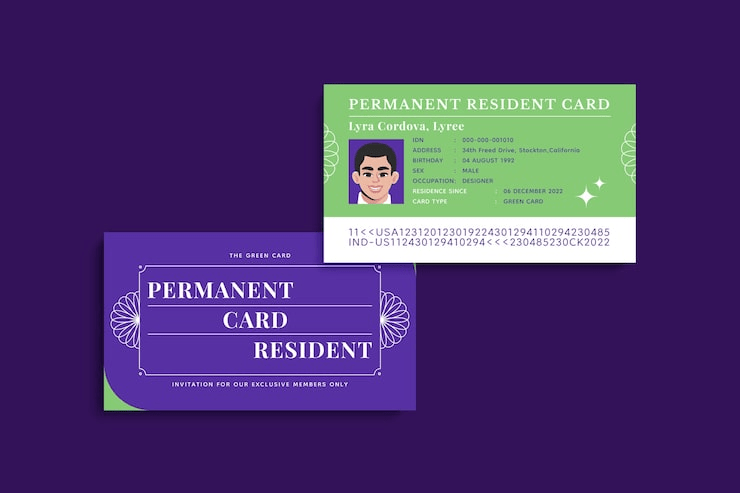
Security features on a modern Permanent Resident (PR) card, such as laser-engraved data, RFID chips, and Optically Variable Ink, are essential because they prevent counterfeiting, securely verify identity, and protect immigration systems from fraud.
Key Takeaways:
- Multilayered Defense Architecture: Modern PR cards (like Canada’s) combine visible physical markers, hidden covert features, and encrypted digital layers to completely block counterfeiting and tampering
- The 7 Core Security Pillars: Document authenticity relies on seven distinct features: laser engraving, holographic overlays, UV-reactive ink, microprinting, a secondary ghost image, a standardized Machine-Readable Zone (MRZ), and an embedded RFID chip
- Verification Strategy: Spotting fraudulent documents requires checking for physical texture shifts (like raised laser engraving), dynamic visual elements, and matching encoded data against the card’s printed information
Modern PR cards (such as those issued by Immigration, Refugees and Citizenship Canada) integrate multiple tiers of physical and digital security to guarantee the authenticity of the credential.
To verify the authenticity of a Permanent Resident (PR) Card and avoid fake documents, focus on the card’s specific security features and data inconsistencies.
This blog will highlight the 7 security features found on a modern PR card.
Key Security Features of the Canadian PR Card
A modern PR card contains multiple layers of security to prevent fraud, forgery, and identity theft.
These features are embedded both visibly and invisibly within the card-
Laser-Engraved Personalization
Modern, government-issued Permanent Resident (PR) cards rely on high-tech security features that novelty ID cards cannot replicate.
Laser-engraved personalization ensures that the data on modern PR cards is not altered or forged.
- Cardholder details (name, photo, and ID number) are laser-engraved, not printed
- Cannot be altered without visible damage
- Creates a tamper-evident surface
These security measures transform the PR card into a highly robust document.
Holographic Overlay
A holographic overlay is a critical anti-counterfeiting measure on modern Canadian PR cards.
- A full-card holographic laminate is applied over the surface
- Shifts color and pattern when tilted
- Deters photocopying and scanning forgeries
This aspect makes it extremely difficult to duplicate, protects personal data from alterations, and allows border officers to instantly verify the legitimacy of the document.
UV (Ultraviolet) Ink Printing
UV ink printing renders hidden patterns, national symbols, and text completely invisible to the naked eye under normal conditions.
- Certain patterns and text are only visible under UV light
- Used by border agents and immigration officers for quick verification
- Invisible to the naked eye under normal lighting
Microprinting
Microprinting serves as an incredibly effective, low-tech deterrent against forgery and counterfeiting through fake PR cards.
This feature makes the PR card better with-
- Tiny text printed at sub-millimeter scale
- Unreadable without magnification
- Blurs or distorts when photocopied or scanned
Ghost Image (Secondary Photo)
The ghost image is integrated directly into the card’s material, preventing tampering and allowing for instant visual verification.
- A smaller, faded duplicate of the cardholder’s photo
- Embedded separately from the main photo
- Makes photo substitution immediately detectable
Machine-Readable Zone (MRZ)
The MRZ on a PR card provides a standardized, tamper-resistant method for instant identity verification.
The MRZ relies on an exact structure and set of security mechanisms-
- Two lines of encoded data at the bottom of the card
- Scanned by border control systems globally
- Contains encrypted cardholder and document information
RFID/Contactless Chip
RFID chips are compliant with ICAO international standards, significantly upgrading PR card security as it-
- Prevents physical forgery
- Eliminates data skimming by not storing personal details directly on the card
- Speeds up border processing by instantly retrieving traveler records
Modern PR cards contain an RFID chip that encrypts biometric data, readable only by authorized immigration systems.
Always cross-check machine-readable zones (MRZs), tamper-evident holograms, and unique form identifiers to avoid fake PR cards.
| Security Feature | Primary Inspection Method | How to Spot a Counterfeit / Replica |
| Laser-Engraved Personalization | Tactile/Physical Touch | Genuine cards have raised, palpable textures on the lettering and date fieldsFakes are often flat or completely smooth to the touch |
| Holographic Overlay | Tilt Angle (Light Source) | Genuine holograms show a sharp, progressive color shiftPoor replicas look like dull metallic stickers or show no dynamic color transformation when rotated |
| UV Ink Printing | Ultraviolet Light (365nm) | Under blacklight, crisp national symbols appear in a sharp, vibrant glowCounterfeits either completely fail to fluoresce or look blurry due to ink bleeding |
| Microprinting | High-Magnification Lens | Sharp, continuous alphanumeric characters under a loupeReplicas show broken, jagged ink dots or look like solid, fuzzy lines |
| Ghost Image | Backlighting/Translucency | A secondary, semi-transparent photo embedded directly inside the polymer layersFakes typically just lower the opacity of a printed top-layer image |
Table: Document Inspection Checklist
To Summarize
Modern PR cards, such as Canada’s standard credential, utilize multilayered, state-of-the-art security to prevent counterfeiting, identity fraud, and tampering.
The 7 key features are laser engraving, holographic overlay, UV ink markings, microprinting, ghost image, machine-readable zone, and RFID.
Unsure If Your PR Card is genuine?
Familiarize yourself with the key security features on a modern Canadian PR card. Educate yourself about authentic modern PR cards, novelty ID cards, and fake PR cards!
