

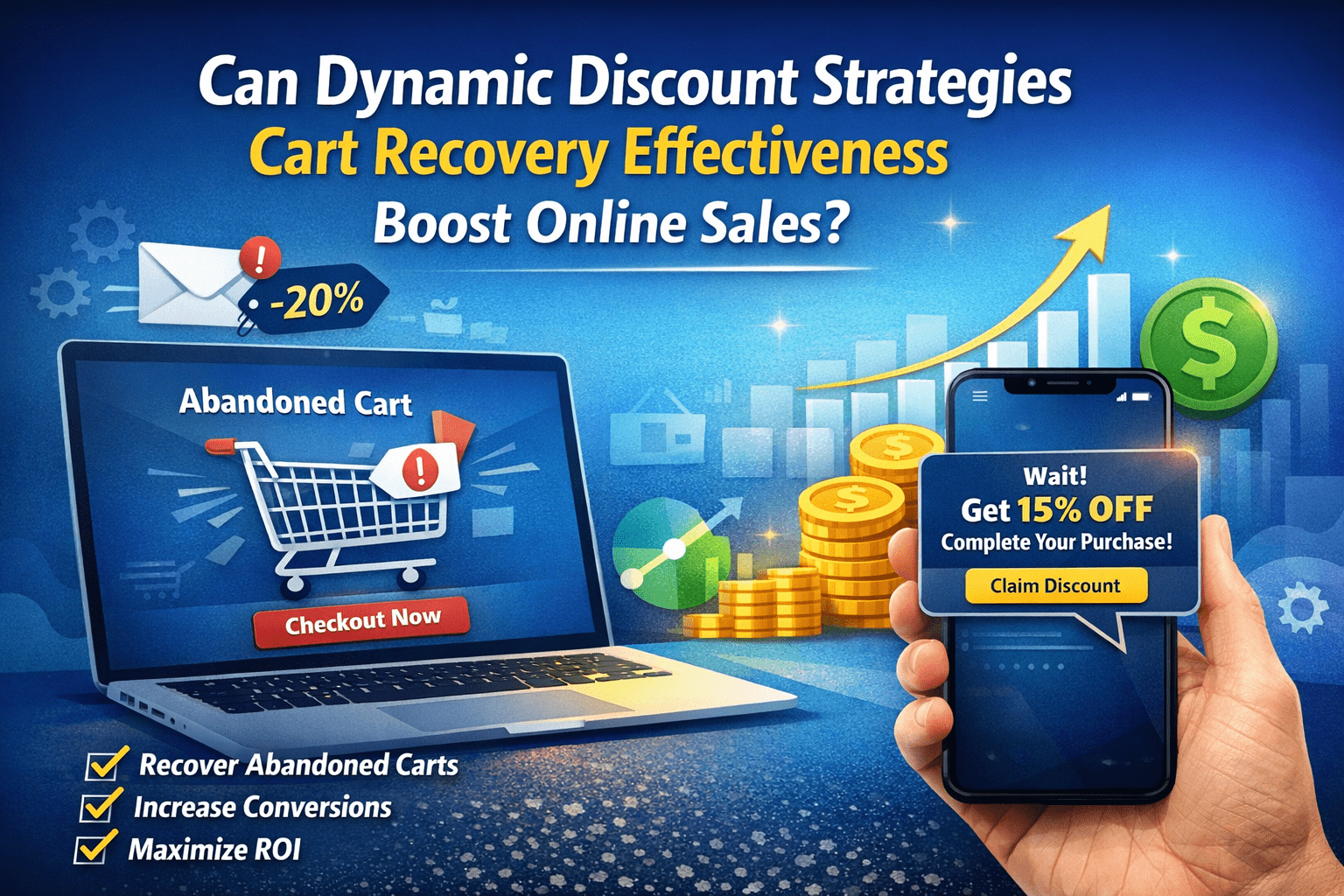
In the competitive world of eCommerce, recovering abandoned shopping carts has become one of the most critical challenges for online retailers. On average, around 70% of online shopping carts are abandoned, representing a massive loss in potential revenue. Businesses are constantly looking for strategies to convert these potential customers into paying ones. One of the most effective methods emerging in recent years is the use of dynamic discount strategies to boost cart recovery effectiveness.
Dynamic discounting is not just about offering random promotions; it’s about strategically personalizing discounts based on customer behavior, purchase history, and engagement patterns. When applied correctly, these strategies can significantly increase conversions and revenue.
Understanding Dynamic Discount Strategies and Their Role in eCommerce
What Are Dynamic Discount Strategies?
Dynamic discount strategies are flexible pricing tactics where discounts are adjusted in real time depending on specific triggers. Unlike static discounts, which are fixed and offered to everyone, dynamic discounts adapt to individual customer behaviors. For example, a shopper who adds items to a cart but leaves without purchasing may receive a time-sensitive discount tailored to encourage completion.
Key Types of Dynamic Discounts
- Time-Based Discounts – Discounts that expire within a limited period to create urgency.
- Behavior-Based Discounts – Offers triggered by customer actions, such as cart abandonment or browsing history.
- AI-Driven or Predictive Discounts – Personalized offers based on predictive analytics, ensuring the discount is appealing but still profitable.
Benefits of Using Dynamic Discounts
- Increases cart recovery rates
- Encourages repeat purchases and loyalty
- Optimizes profit margins by offering discounts only when necessary
- Enhances the customer shopping experience through personalization
Cart Recovery: A Critical Metric for eCommerce Growth
What Is Cart Recovery and Why It Matters
Cart recovery refers to strategies that re-engage customers who leave without completing a purchase. Recovering abandoned carts not only boosts revenue but also provides insights into customer behavior, helping businesses refine their marketing and pricing strategies.
Common Reasons Customers Abandon Carts
- Unexpected shipping costs
- Complicated checkout processes
- Lack of urgency or incentives
- Comparison shopping with competitors
Traditional vs. Dynamic Cart Recovery Approaches
Traditional approaches often include generic email reminders or static discounts. While these methods can work, they are less effective than dynamic strategies, which tailor incentives to specific customer needs and behaviors, leading to higher recovery rates.
How Dynamic Discount Strategies Improve Cart Recovery Effectiveness
Personalization and Customer Segmentation
Dynamic discount strategies thrive on personalized offers. Segmenting customers by behavior, purchase history, or demographic allows brands to offer discounts that feel relevant and timely, significantly increasing the likelihood of purchase.
Real-Time Discount Triggers for Abandoned Carts
Offering discounts immediately after cart abandonment, or even through exit-intent pop-ups, can nudge customers to complete their purchase. Real-time triggers create a sense of urgency and make customers feel valued.
Case Studies of Successful Dynamic Discount Campaigns
Several eCommerce brands have reported 20-40% increases in conversion rates after implementing dynamic discount strategies. Retailers in fashion, electronics, and home goods have seen measurable improvements in average order value and customer engagement.
Measuring the Effectiveness of Dynamic Discount Strategies
Key Metrics
- Cart Recovery Rate: Percentage of abandoned carts converted into purchases
- Conversion Rate Post-Discount: Evaluates how well discounts encourage final purchase
- Return on Investment (ROI): Ensures discounts do not harm overall profitability
Tools and Analytics for Tracking Performance
Ecommerce platforms often offer integrated analytics to track discount performance. Tools that monitor customer behavior, engagement rates, and sales trends help refine strategies for better outcomes.
Avoiding Common Pitfalls
While discounts can drive sales, overusing them can erode margins or train customers to wait for offers. Careful monitoring and strategic discount application are essential for long-term success.
Best Practices for Implementing Dynamic Discount Strategies
Balancing Discounts and Profit Margins
Dynamic discounts should target customers likely to convert without eroding profits. Offering small, personalized incentives can be more effective than broad, deep discounts.
Timing and Frequency of Offers
Timing is crucial. For instance, sending a discount within 24 hours of cart abandonment tends to have the highest conversion impact. Avoid excessive reminders that may annoy customers.
Integrating Discounts with Marketing Automation
Combining dynamic discounts with email campaigns, push notifications, or retargeting ads ensures consistent messaging and higher engagement. Automation also allows businesses to scale recovery efforts efficiently.
Challenges and Risks of Dynamic Discount Strategies
Over-Discounting and Customer Expectation Issues
Frequent discounts can create a perception that products are always negotiable, reducing perceived value. Brands must strike a balance to maintain long-term loyalty.
Data Privacy and Compliance Considerations
Using customer data for personalization requires strict adherence to privacy laws and regulations, including GDPR and CCPA. Transparency and consent are essential.
Technical Limitations and Integration Challenges
Implementing real-time, behavior-driven discounts requires robust eCommerce platforms and integration with analytics tools. Smaller businesses may face technical challenges without proper resources.
Future Trends in Cart Recovery and Dynamic Discounts
AI and Predictive Analytics in Pricing
While the term “AI” is widely used, advanced predictive models allow smarter, data-driven discounting that anticipates customer behavior without generic assumptions.
Behavioral Personalization at Scale
Retailers are moving toward hyper-personalized experiences, offering discounts based on individual preferences, shopping history, and even external factors like seasonality.
The Role of Mobile and Omnichannel Cart Recovery
With mobile commerce dominating online sales, dynamic discounts are increasingly delivered via apps, SMS, and social media, creating a seamless omnichannel experience that improves recovery rates.
Frequently Asked Questions (FAQs)
1. How quickly should dynamic discounts be offered after cart abandonment?
Discounts are most effective within 24 hours, as customer interest is still fresh.
2. Do all customers respond to dynamic discount strategies?
Not every customer reacts the same way. Segmentation and personalization help target the most responsive buyers.
3. Can small businesses effectively use dynamic discounts for cart recovery?
Yes, with the right tools and strategic planning, even small retailers can increase recovery rates without sacrificing margins.
4. What is the difference between static and dynamic discount strategies?
Static discounts are fixed and universal, while dynamic discounts adapt based on customer behavior, timing, and engagement.
5. How does predictive pricing improve discount campaigns?
Predictive pricing ensures that discounts are offered to the right customer at the right time, maximizing recovery without unnecessary revenue loss.
6. Are there risks to offering too many discounts for cart recovery?
Yes, excessive discounts can train customers to wait for offers, reducing long-term profitability. Strategic application is key.
Conclusion: Maximizing Online Sales Through Dynamic Discount Strategies Cart Recovery Effectiveness
Dynamic discount strategies are a powerful tool for recovering abandoned carts and boosting online sales. By leveraging personalized, time-sensitive, and behavior-driven offers, eCommerce businesses can increase conversions, enhance customer satisfaction, and optimize revenue.
However, the key to success lies in measuring performance, avoiding over-discounting, and integrating strategies with marketing automation. Businesses that implement these tactics thoughtfully are likely to see significant improvements in cart recovery effectiveness and overall sales growth.
