

Many companies define their culture through core values and what makes them unique. But promoting growth and keeping employees engaged often requires measuring performance at both the company and individual levels. Constructive feedback systems help establish a framework, and this software plays a key role in maintaining it. Here is some information about creating a constructive culture with employee review software:
Understanding What Review Software Can Do
Employee review software helps managers systematically track performance by recording feedback and keeping a documented history of performance discussions. Managers often use these tools to maintain a consistent record of employee progress rather than relying on scattered notes. This can lead to a clear, reliable process for measuring performance and improving review accuracy. The software includes tools that track progress in real time and directly link individual performance to team or company objectives; managers who use these tools may see increased employee engagement.
Promoting Ongoing Employee Feedback
Continuous feedback models often improve management performance by promoting consistent, measurable interactions. Instead of gathering all observations for a single annual review, supervisors can document feedback throughout the year, set up automated check-ins, and monitor performance more effectively. Relying solely on yearly employee reviews often leads to forgotten data and biased or inconsistent assessments. Feedback systems emphasize progress and growth through small, steady steps that are recorded and reviewed regularly.
In performance management, some managers are shifting from acting primarily as evaluators to taking on more of a coaching role. This approach emphasizes guidance, skill development, and support, along with assessment. Providing regular opportunities for feedback helps structure ongoing communication between managers and their team members.
Employee review software records these interactions, tracks goal progress, and highlights areas where progress has slowed, which allows managers to respond earlier. These tools also help organize feedback and maintain continuity as the frequency of discussions increases. Performance trend reports and goal tracking support alignment between review cycles and reveal patterns over time. Continuous feedback sessions also clarify role expectations, outline the steps needed for growth, and provide employees with a more detailed understanding of how their contributions connect to broader team objectives. By maintaining consistent records, managers identify changes in priorities and adjust responsibilities without relying solely on annual reviews.
Using Employee Review Software
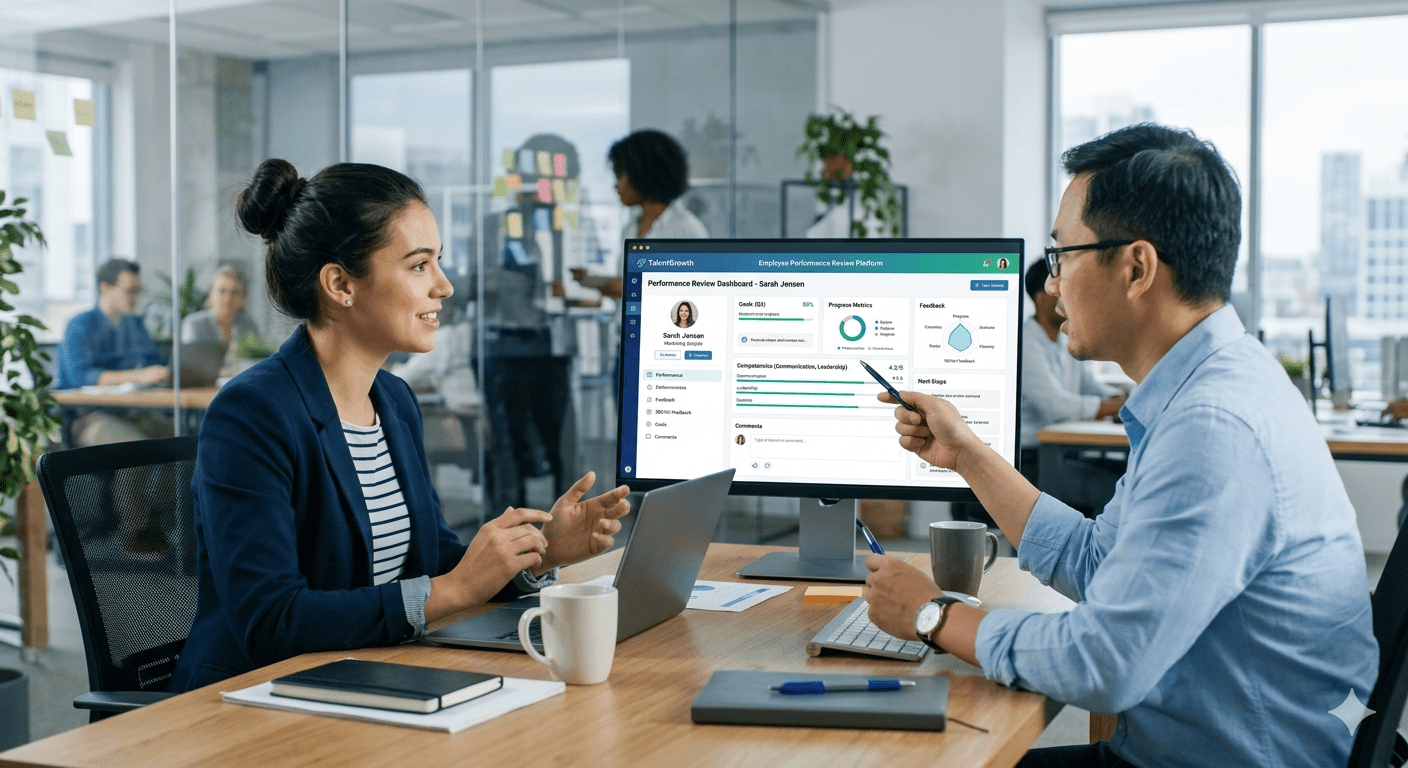
A key feature of review software is the ability to analyze progress reports by summarizing all metrics on a single dashboard. It provides a snapshot of past feedback, helping to reduce the need to manually gather data for each meeting. Review software does more than record performance; it actively promotes improvement. Here are some of the software’s key functions:
- AI-generated talking points that highlight relevant data and suggest discussion topics for one-on-one meetings.
- Calibration tools to standardize evaluations, improve consistency, and reduce bias across teams.
- Individual development plans linking feedback to skills training and career growth.
- HR system integration that syncs employee data and reduces administrative work.
- Performance dashboards displaying goal progress, feedback history, and trends in one view.
Employee review software offers managers predictive insights throughout the year and reduces the tendency to be reactive only during an annual review. This means grounding feedback in recent, real data, rather than memory. Its AI function spots trends that humans often miss, so this may identify disengagement or overload sooner. It also helps reveal which projects or tasks consistently lead to high performance or bottlenecks across teams.
Performance software needs to work within your existing HR systems. Check whether it can connect to your review processes, rating scales, and organizational structure. Also, evaluate if it will automatically import relevant employee data to keep information up to date. Make sure it is able to adapt as your company’s processes or systems evolve over time.
Make Employee Review Software Work for You
Employee review software helps deliver efficient feedback systems. Its goal-tracking and performance-trend features provide managers with information to monitor progress and adjust priorities. The platform also facilitates regular interactions between managers and employees, creating more structured opportunities for feedback and discussion. If a company wants to move beyond annual reviews and create a smoother workflow, the software can turn continuous feedback from an ideal into a repeatable, measurable practice. Discover how this software helps to cultivate a more constructive culture today.
